RezScore Spotlight: we introduce job seekers to recruiters on LinkedIn
RezScore Spotlight introduces job seekers with strong resumes to recruiters on our LinkedIn page. Who qualifies, how consent works, and what we never do.
We grade resumes for a living, over 13 million since 2014. Here is what the data says about work, hiring, and getting the job.
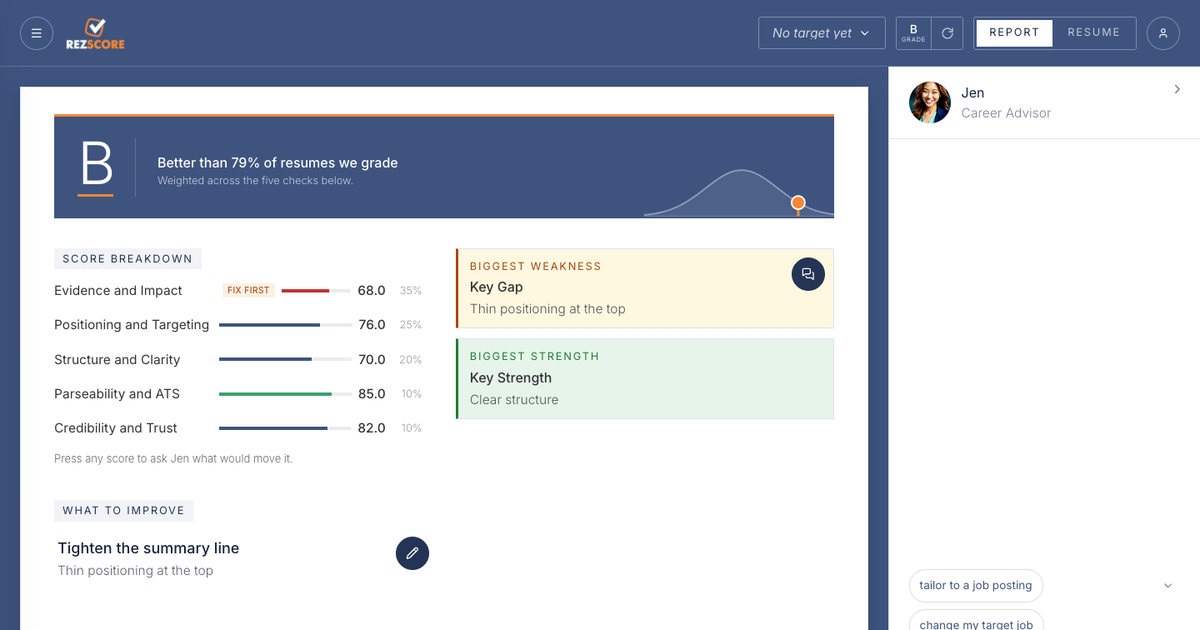
After you upload a resume, RezScore now opens a workspace instead of a results page: your grade, the five checks behind it, two grades against a target role, and Jen beside the report. What changed, what it costs, and what to do first.
RezScore Spotlight introduces job seekers with strong resumes to recruiters on our LinkedIn page. Who qualifies, how consent works, and what we never do.
We pulled 500 software engineer resumes. Strong verbs everywhere, results almost nowhere: about 1 in 11 bullets says what changed. Here is how to fix yours.
Every college major, grouped by field and built on the federal program taxonomy, with links to how common each one is and where it tends to lead.
Resume bullet examples, before and after, grouped by what was wrong: duties instead of results, no scope, buried points, vague verbs, inflated claims.
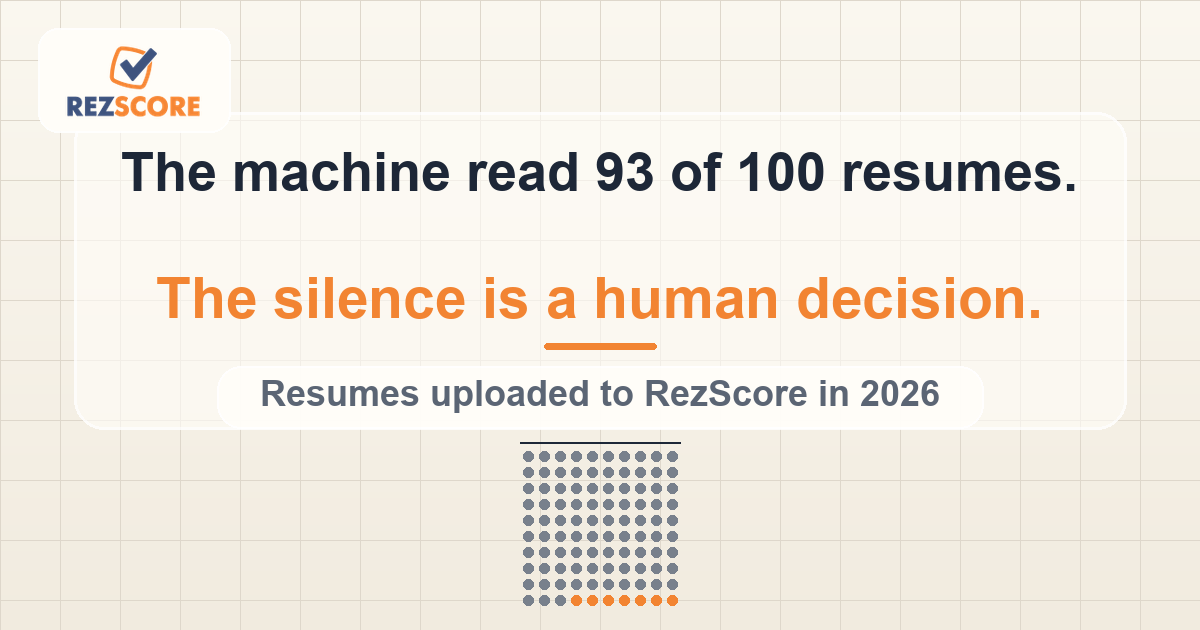
Job postings climb in September while applications fall, and the machine read 93 of every 100 resumes uploaded to RezScore this year. What the data says to fix before you apply this month.
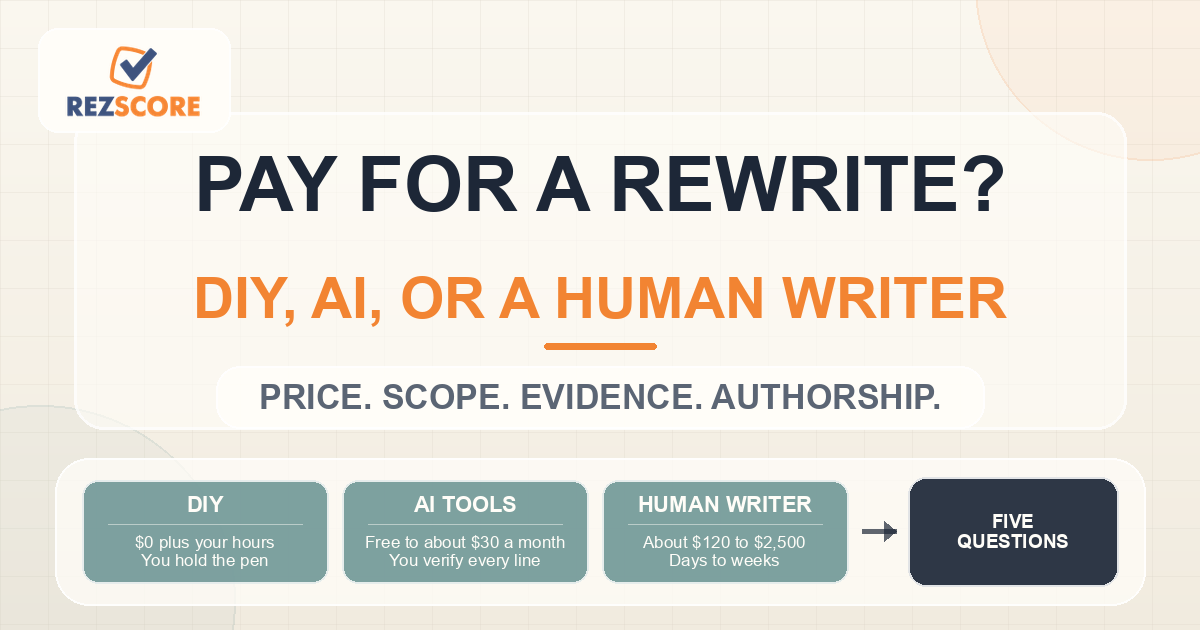
What DIY, AI tools, and human resume writers cost in 2026, what the evidence supports for each, and five questions that settle the decision for your situation.
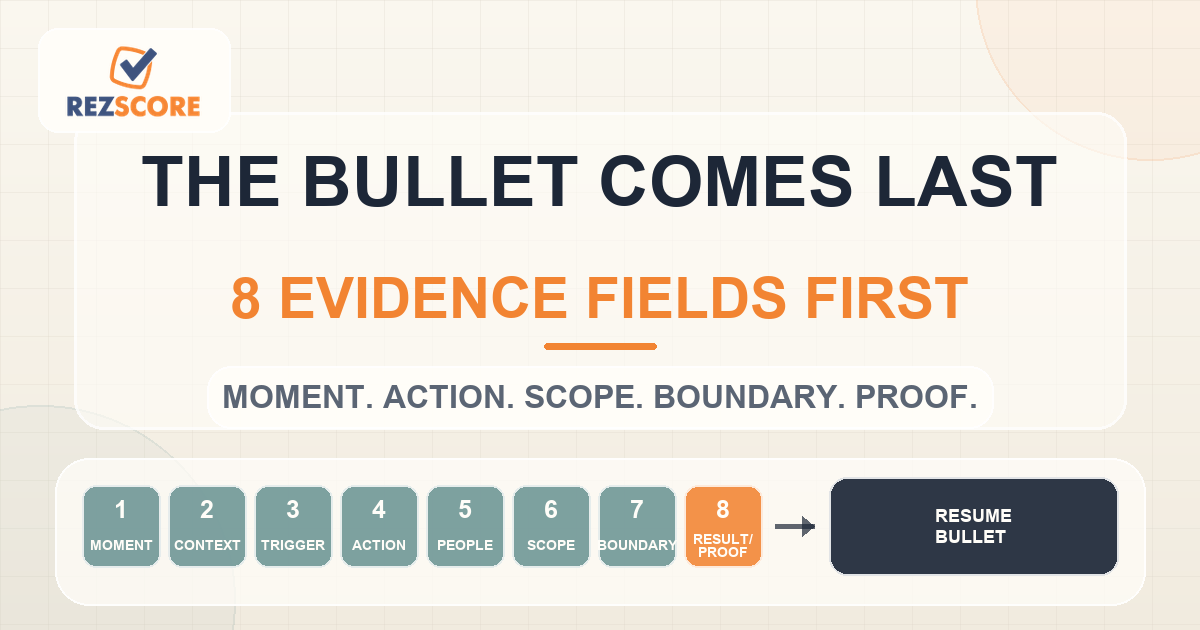
Capture eight evidence fields about your work before drafting resume bullets. The result is honest source material you can reuse for different job targets.
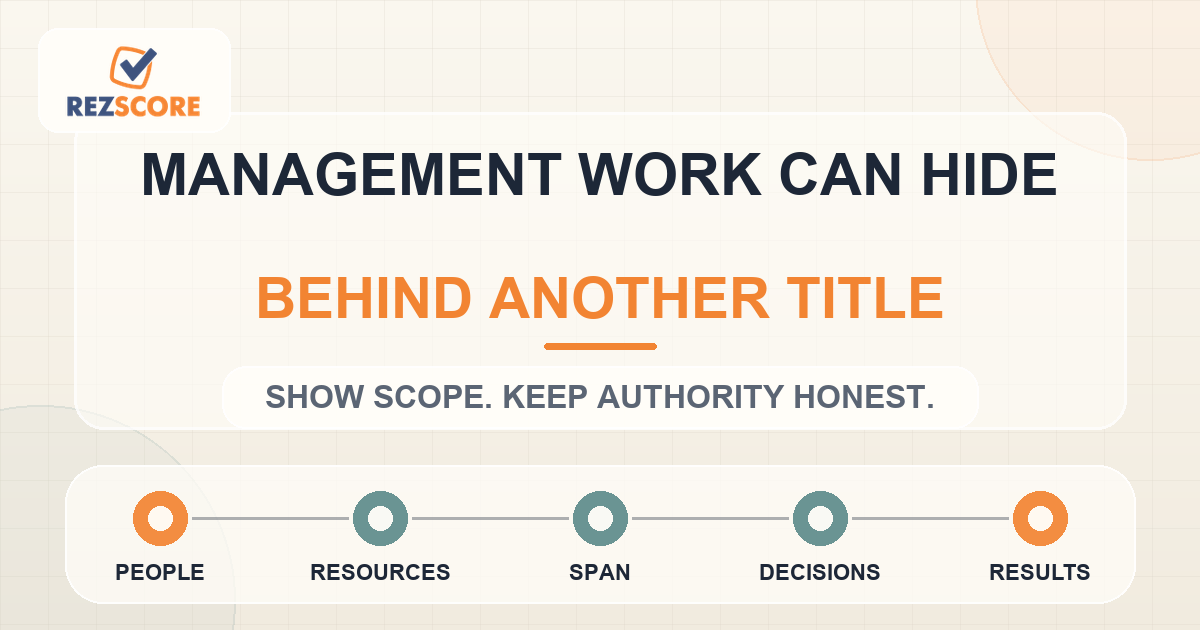
Coordinators, supervisors, administrators, and senior specialists can carry real management-shaped responsibility. Use specific evidence to show the work without inflating your title or authority.
BLS projects 308,700 openings a year for general and operations managers. See what the figure measures, who it includes, and what candidates need to prove.
Your report shows a dot on a two-axis chart, not just a grade. Here is what Presentation and Qualifications each measure, why the same resume reads differently against different targets, and what to do in each of the four quadrants.
Your saved resume's grade moved and you didn't touch the document. Here's what the 2026 rubric measures, why evidence now carries more weight, and what to fix first.
A major opens a set of career paths, not one job. How 15 major families map to real careers, what employers check, and how to build resume evidence.
Prompt engineering pays well but rarely appears as a job title. What January 2026 posting data and the July 2026 AI math results mean for your career.
Is software engineering still worth it in 2026? What January 2026 posting data shows about AI, enterprise skills, remote roles, and entry-level hiring.
Every resume guide says quantify your achievements. Nobody explains what to do when your work never came with a dashboard. Here is the honest method: mine, estimate defensibly, or be specific in a different direction.
The most common question after a resume grade is not about the grade. It is: what do I actually do next? Here is the exact order of operations, from evidence bullets to job targeting to the re-grade.
Dozens of applications, months of silence. An honest accounting of what is actually happening to your applications in 2026, which parts a resume can fix, and which parts it cannot.
Workforce programs, bootcamps, and career centers coach thousands of resumes but rarely measure whether they got better. A before-and-after framework for reporting resume outcomes at the cohort level.
AI resume tools invent metrics, titles, and achievements because plausible beats true. Here is why it happens, what a fabricated bullet costs you, and the evidence-first method that improves a resume without fabricating it.
An honest resume checker and resume grader comparison: what six free tools actually do best, what each free tier includes, and where the paywall starts.
There is no universal resume score. Here is what a good one actually means, backed by the distribution of more than 70,000 real graded resumes, and when to stop optimizing for the number.
RezScore has graded more than 13 million resumes. We analyzed the newest 70,000+ of them: the distribution, the quantification gradient, and a counterintuitive finding about length.
What RezScore is, how the free resume grader works, and a short walkthrough video: upload your resume, get two instant grades, see where you land on the map, and talk to Jen about what to fix first.
We ranked the top college majors for 2026 using over a million real resumes, with salary data, trends, and the full top 100 list.
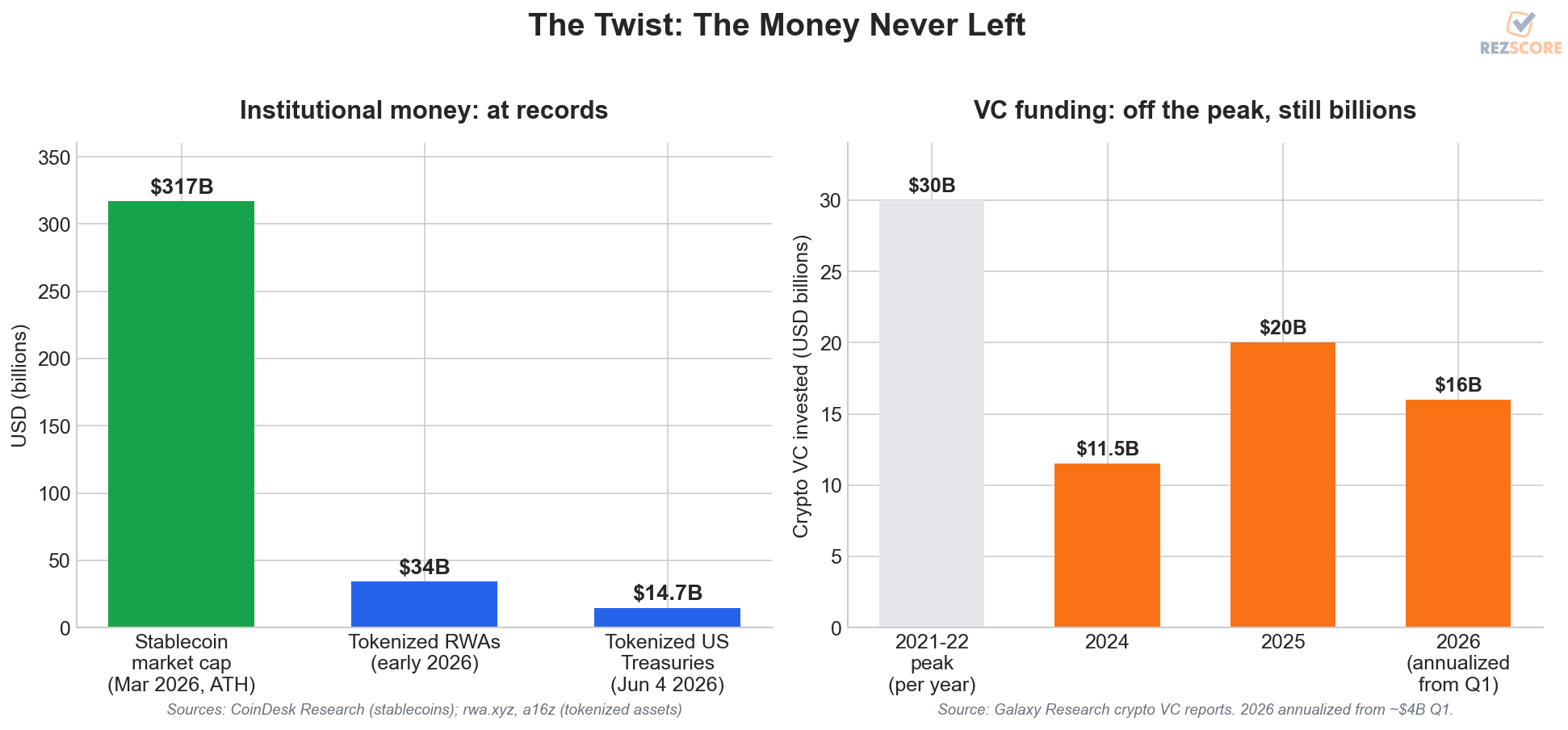
Tech's job market and crypto's price chart are both in the dirt at the same time. That coincidence is doing something interesting to where talent goes.
Not all AI is created equal. Here's what we learned from grading millions of resumes.
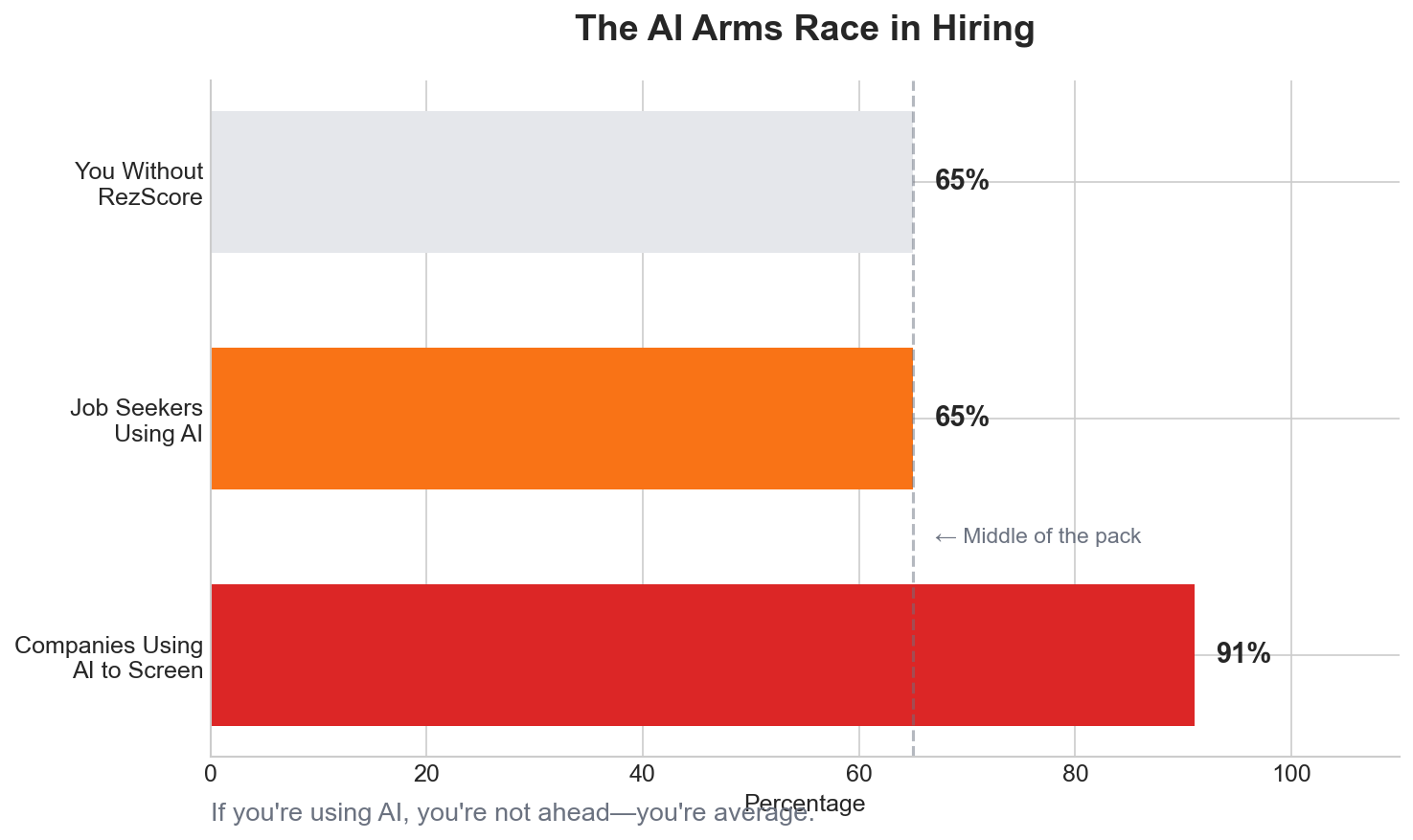
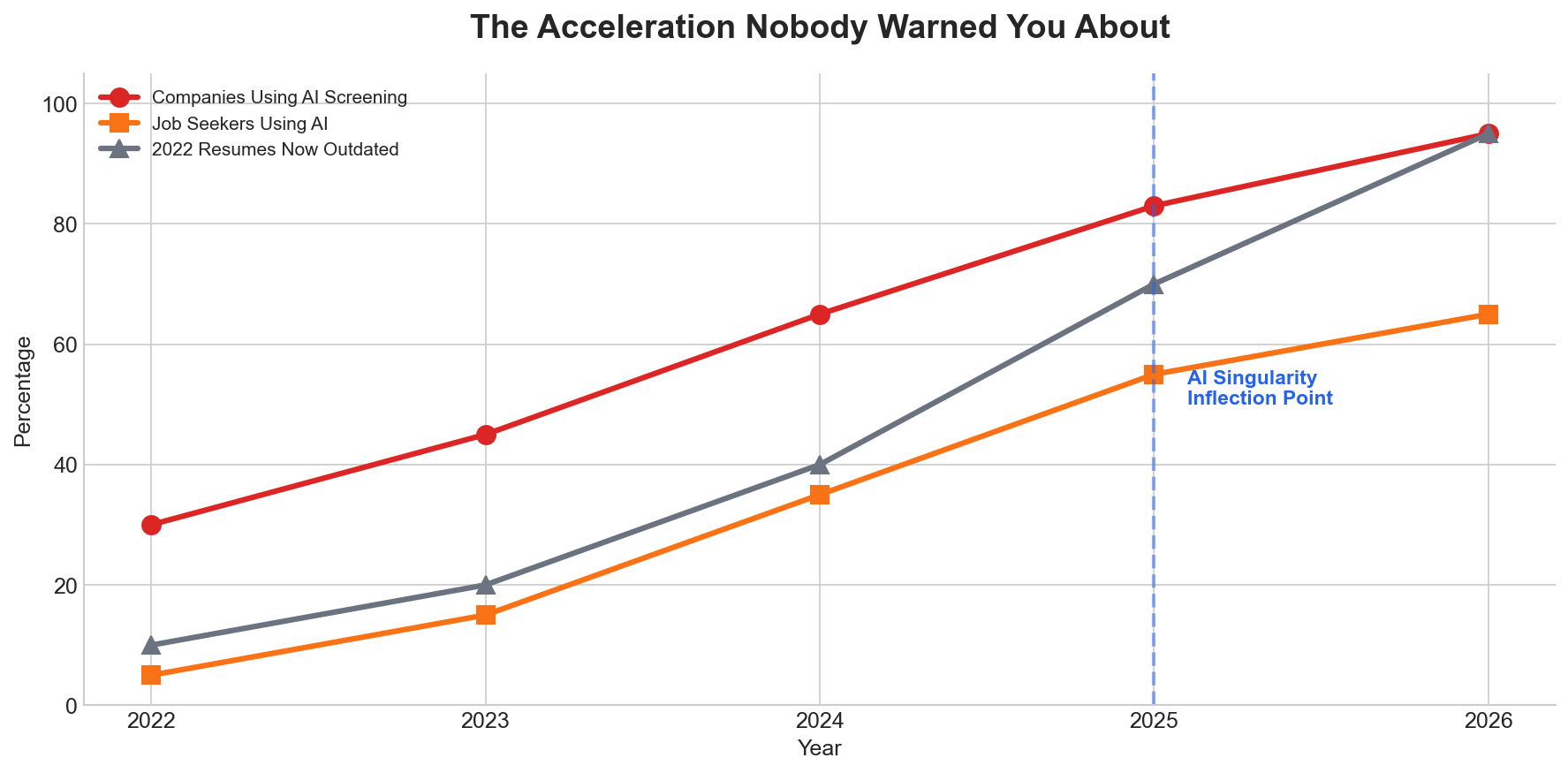
Resumes are not dead, but the 2025 playbook is. AI screening changed the hiring stack; here is what to update first in 2026.
Our analysis of current US job postings found only 7,359 mentions of prompt engineering, while Python appeared in 137,176 roles across the market.
Where career tech has been, and where AI is taking it.
Our data agrees with Shakespeare: across more than 70,000 graded resumes, A resumes are shorter than C resumes. Why brevity wins on a resume, and what to cut first.
A professional headline is a short summary of what you do and where you are headed. Learn how to write one for your resume, profile, and email.
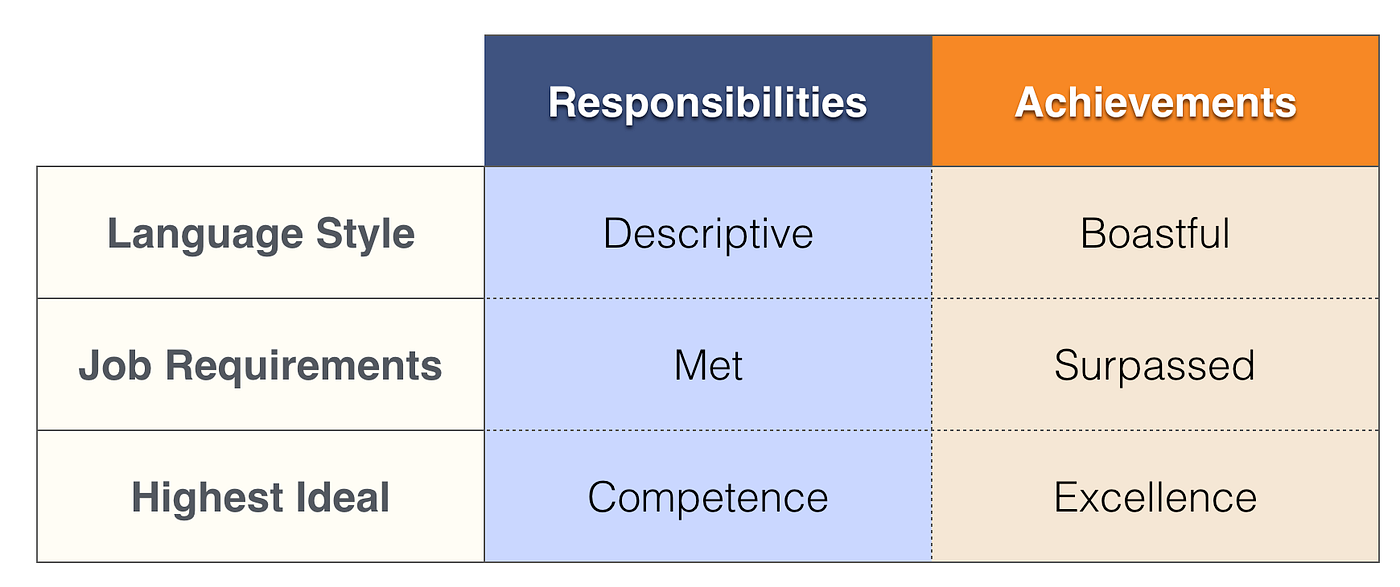
Move from listing responsibilities to showcasing achievements.
A holiday follow-up to the Red Balloon Experiment on networking your job search.
A contrarian case that work-life balance is dead, so you should make work the center of your social life to gain influence and friends.
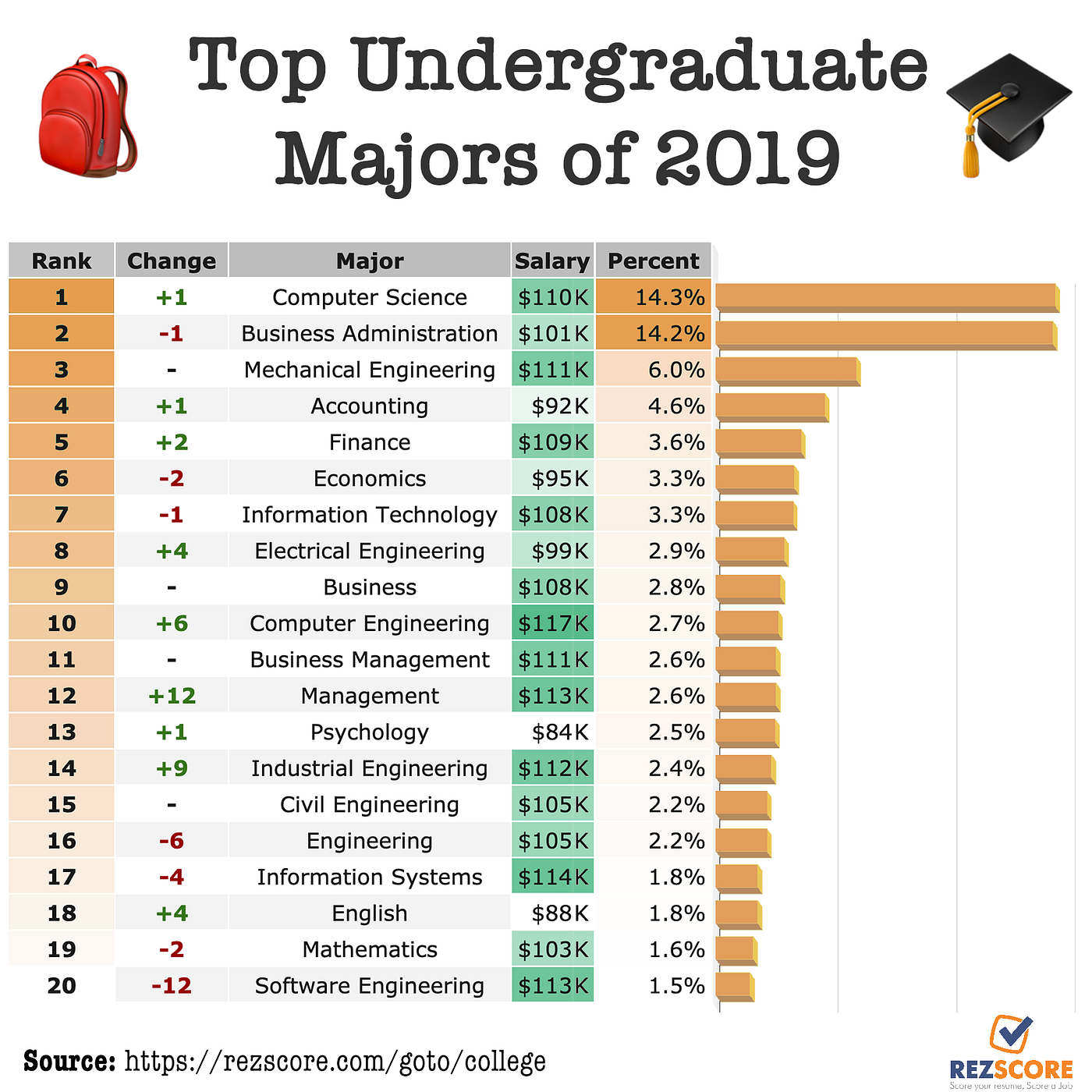
Historical 2019 ranking of the top 100 college majors by popularity and median salary. For the current ranking, see our 2026 analysis built from over a million resumes.
Negotiate the price of your lunch every day and you will quietly turn into a far better salesperson within a year.
Improve every part of your job hunt by shifting your writing from the first person to the second person, your reader.
A resume roast for a master's-level internship candidate straddling the technology and business divide.
If a task takes under two minutes, do it now. We grade the popular Two Minute Rule against our framework for quality success hacks.
MIT's Edward B. Roberts on the traits that make a founder worth investing in: intelligence, motivation, and a decade-long view of trust.
Swap three words at work to turn yourself from an informational dead end into your team's most valuable player.
How we turned a five-page nonprofit and corporate management resume into a two-page piece of resume art.
Why matching busy work to your least productive hours can win you both more sleep and more output.
Introducing the CDE framework for evaluating whether a success hack is worth your time.
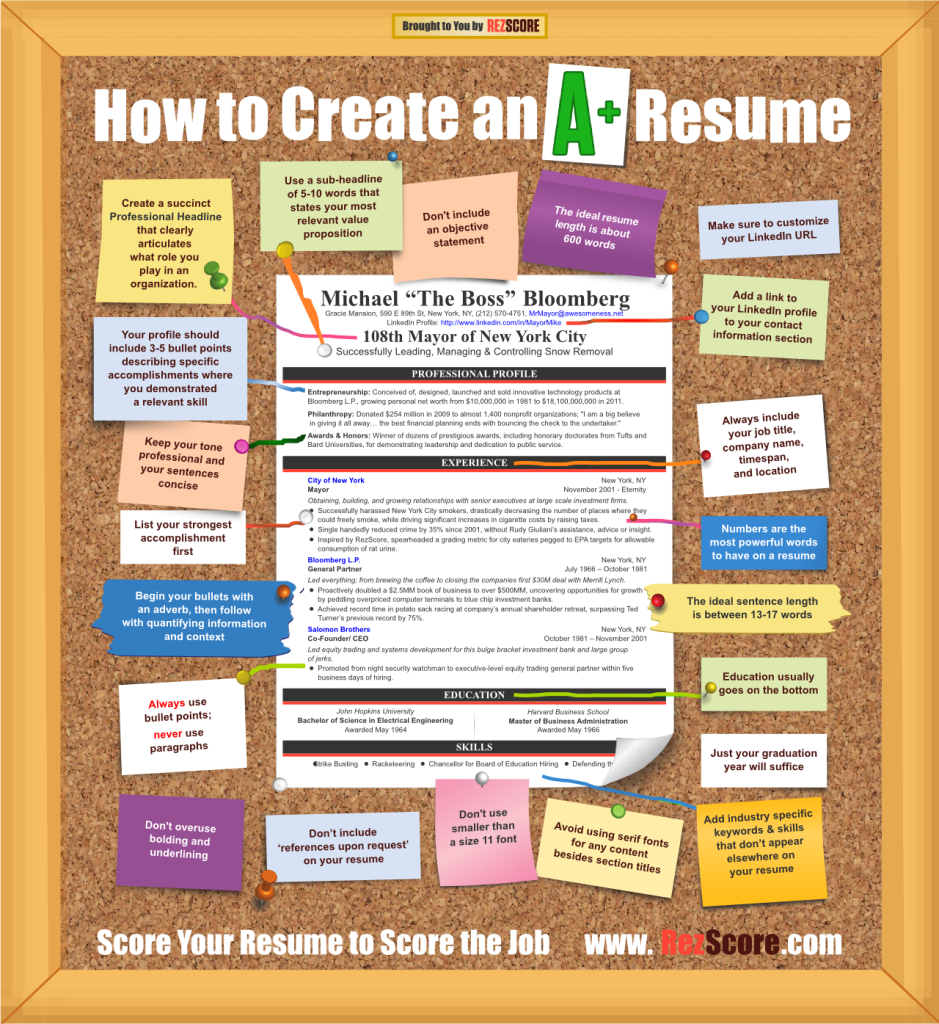
The section-by-section structure of a top-scoring resume.
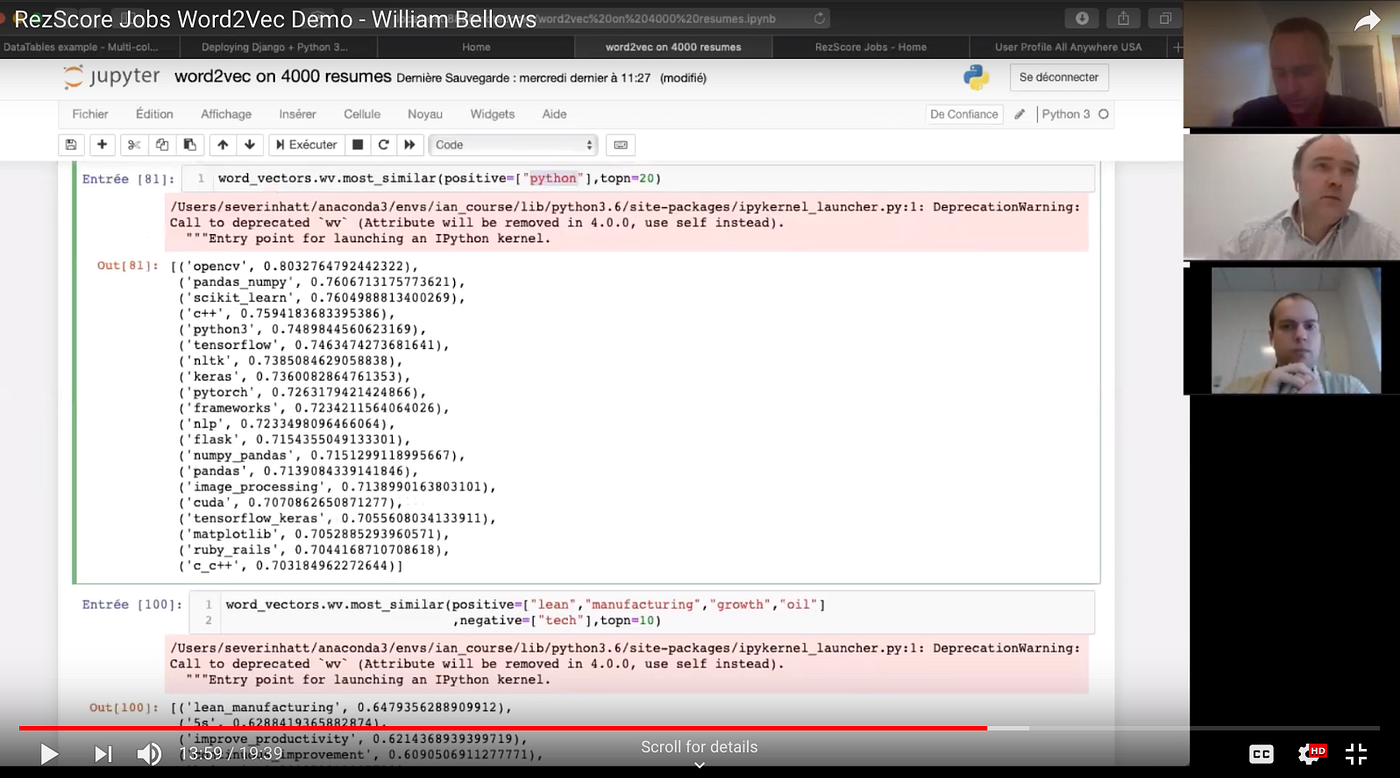
A walkthrough of using Word2Vec to align your resume with a job description.
Why submitting your resume online so often feels like throwing it into a black hole, and how RezScore Jobs solves the job-search black hole.
How Applicant Tracking Systems really parse your resume, and the data-science principles you can use to get past them.
What a DARPA balloon-hunt contest teaches about networking your job search.
How RezScore experts lifted a talented software intern's resume out of the average C range.
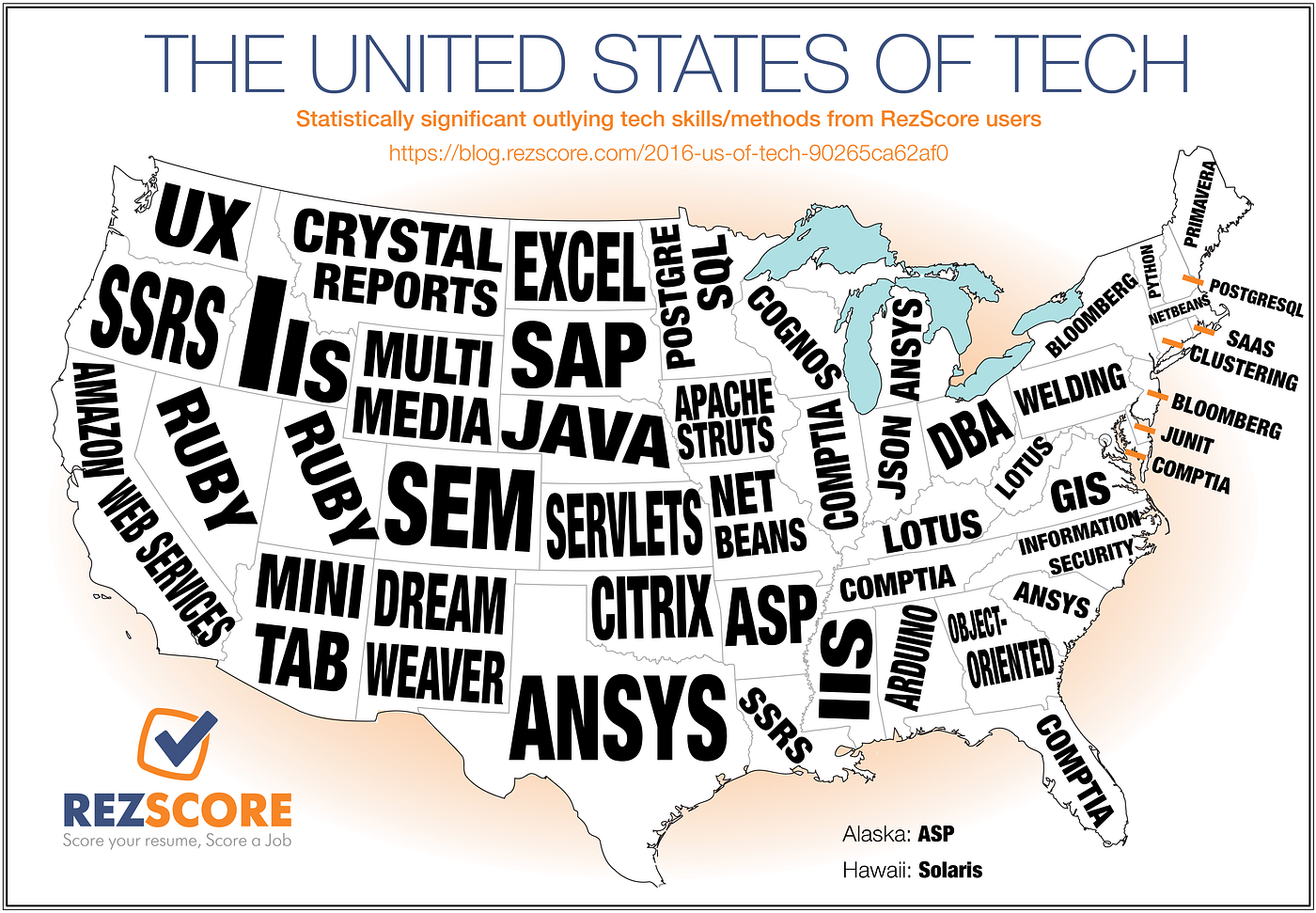
A 2016 infographic on the U.S. technology landscape.
How RezScore built the first crowdsourced salary estimator, and what 25,000 user salary reports revealed about pay, geography, grades, and education.
RezScore's four-dimensional personality model for resumes, a more workplace-relevant alternative to Myers-Briggs.